Modern cybersecurity is not a one-person responsibility. Every security incident requires coordination between SOC analysts, security managers, and other teams to assess what happened, determine the right response, and move from detection to action.
The challenge is that the teams responsible for security are often expected to coordinate across multiple disconnected tools.
Alerts may appear in one system. Tickets may be managed somewhere else. Tasks may live in another platform. As the number of tools grows, so does the operational effort required to keep everything aligned.
For modern organizations, the problem is no longer simply detecting threats. It is being able to manage security operations efficiently once those threats are detected.
Cyberwatch360 was designed to address exactly this challenge: bringing alerts, ticketing, and SOC tasks together in one intelligent, unified platform.
A security team can have experienced analysts and strong security technologies, yet still lose valuable time when their workflow is fragmented.
When analysts have to move between different systems to investigate an alert, create a ticket, assign tasks, and track progress, every additional step introduces friction.
This can lead to:
For SOC managers, this also makes it harder to maintain a clear view of what the team is working on and whether incidents are progressing efficiently.
The goal should not be to give security teams more tools. It should be to give them a better way to work with the tools and information they already depend on.
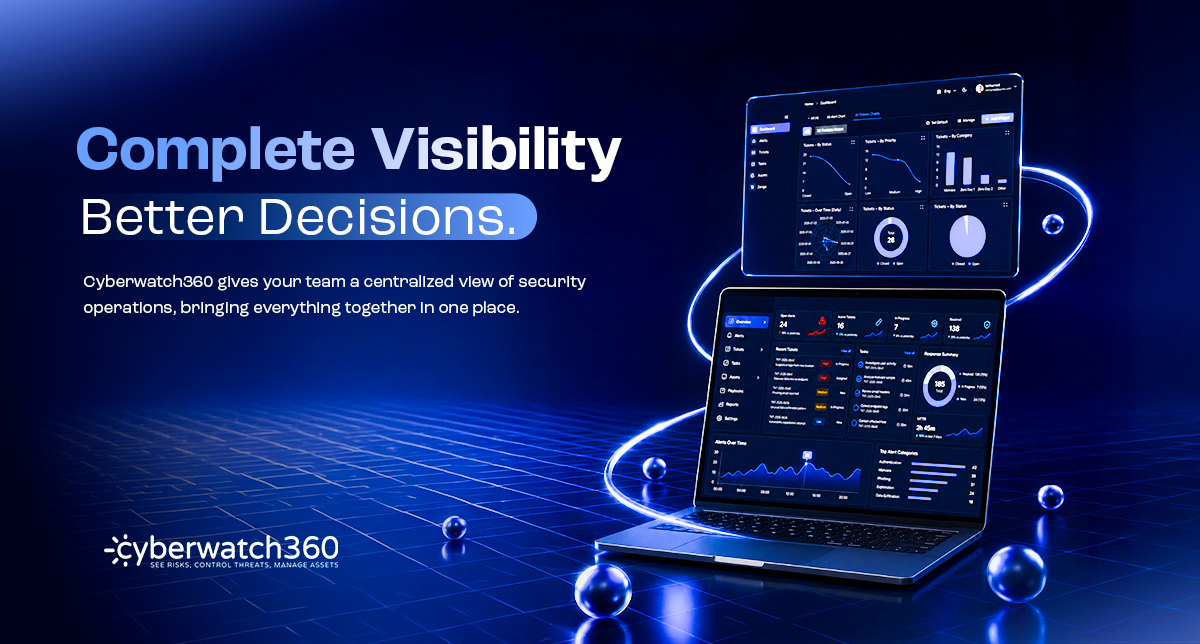
Cyberwatch360 brings the core operational elements of a Security Operations Center (SOC) into one centralized environment.
Instead of treating alerts, tickets, and tasks as separate processes, Cyberwatch360 connects them into a more organized workflow.
Security operations depend on teams having access to the information they need.
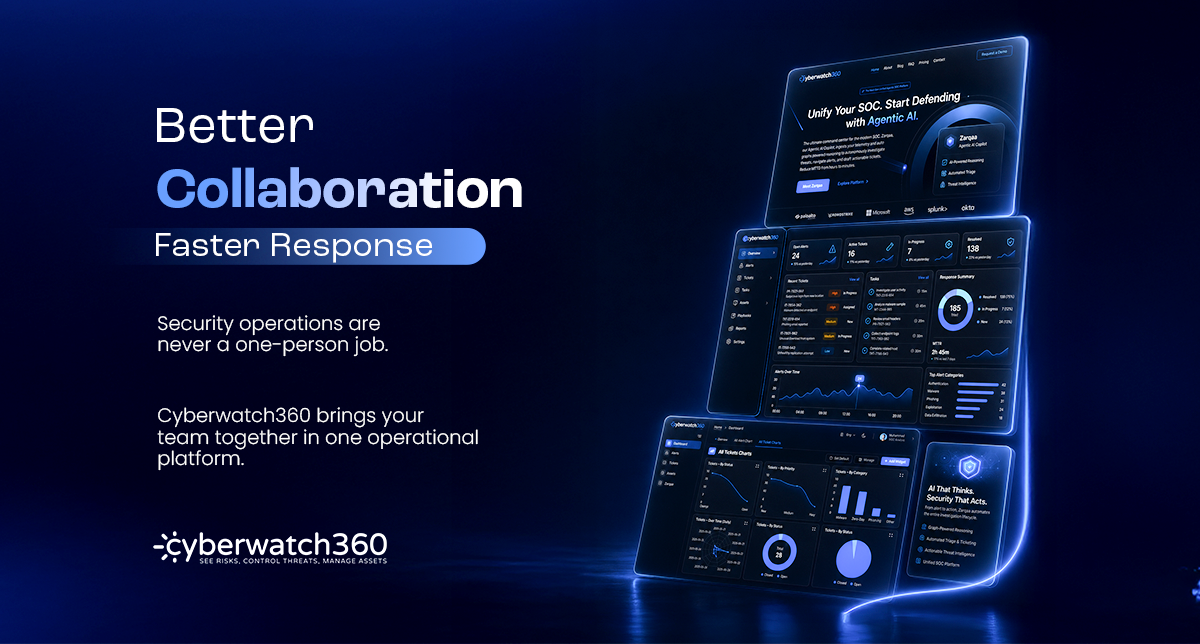
With a unified environment, analysts and managers can work from the same operational view, making it easier to understand what requires attention and how incidents are progressing.
This shared visibility helps teams coordinate without relying on disconnected systems or manual communication to maintain context.
A security alert should not become another isolated item that an analyst has to manage manually.
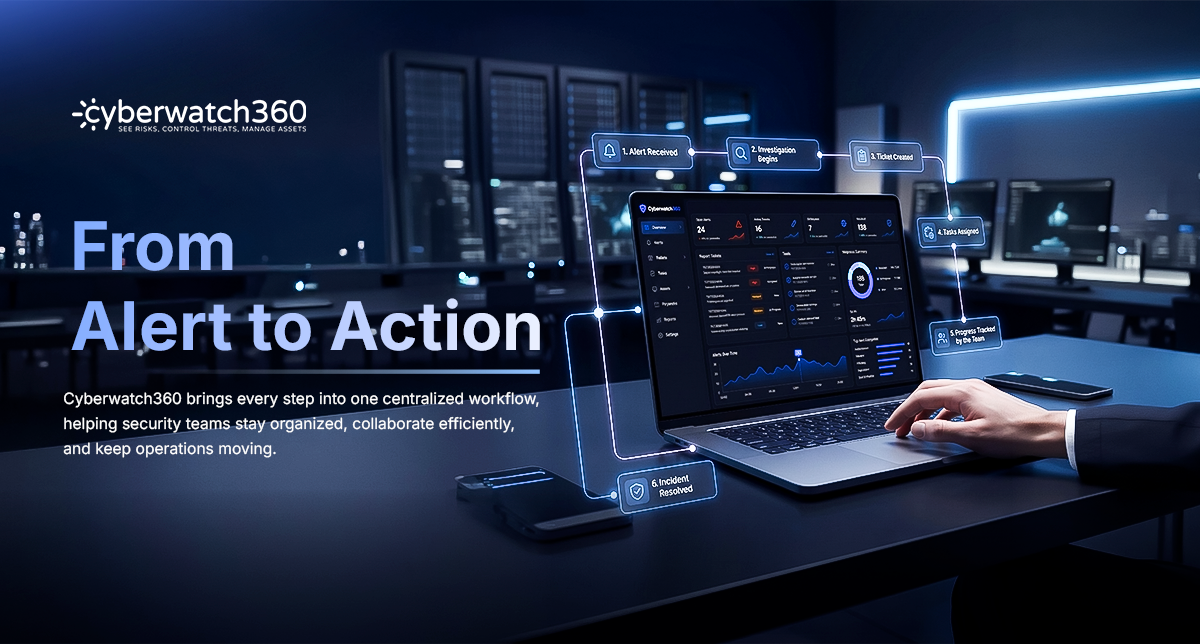
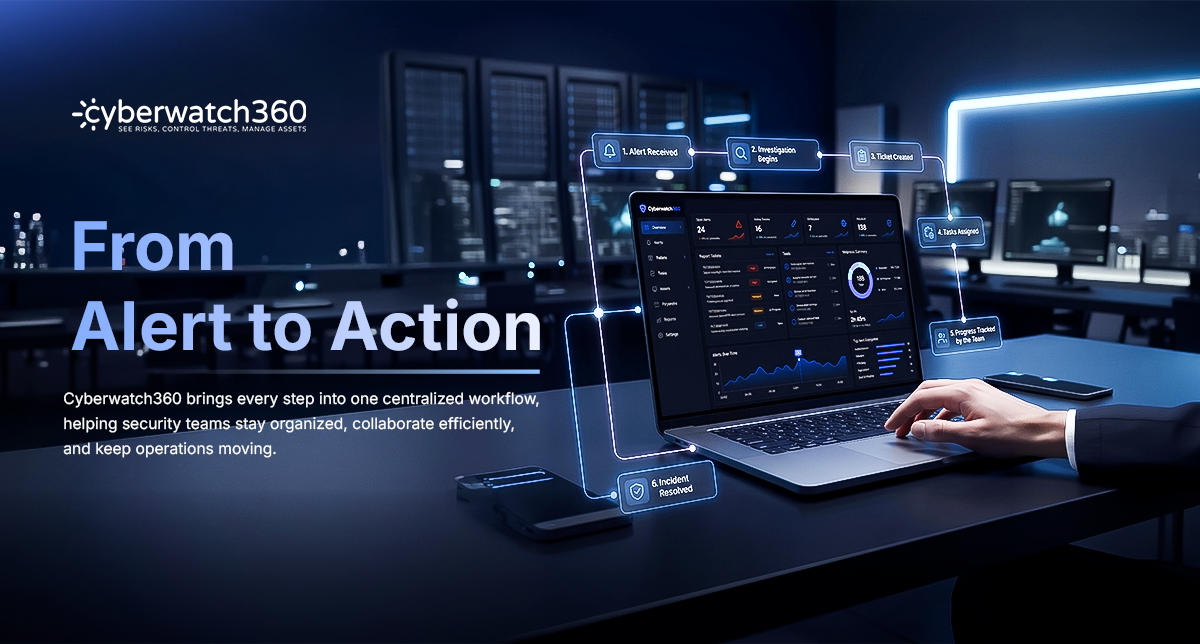
Cyberwatch360 is designed to connect the operational journey from alert to ticket to task. An alert can be turned into a ticket, and the ticket can then be broken down into actionable tasks that can be assigned and tracked by the team.
This creates a more seamless workflow without requiring analysts to constantly switch between systems.
Ticketing and task management are essential parts of effective incident management.
When these processes are centralized alongside security alerts, teams can maintain better continuity throughout an incident.
Instead of asking, What happened? Who is handling it? What needs to happen next?, the operational context can remain connected in one place.
That means less administrative effort and more time available for meaningful security work.
A unified platform addresses workflow complexity, but modern SOCs also face another challenge: the sheer volume of security alerts.
Not every alert represents a genuine threat. Excessive noise can consume analyst time and make it harder to prioritize the incidents that deserve immediate attention.
This is where advanced Artificial Intelligence can act as a force multiplier for security teams.
Cyberwatch360 uses AI to help distinguish between genuine threats and false alerts, reduce unnecessary noise, and support faster and more accurate threat analysis.
Rather than replacing security professionals, the objective is to help them spend more of their time where their expertise matters most.
Effective incident management requires more than detecting a potential security event. Teams need an organized process for assessing, prioritizing, assigning, and responding to it.
Cyberwatch360 combines automated threat detection with operational workflows designed to reduce repetitive manual work.
This can include automating processes such as:
The result is a security operation that is easier to manage and better positioned to respond efficiently.
Not every organization has the resources to build a large, dedicated SOC.
Smaller security teams often have to manage multiple responsibilities while still maintaining effective protection and incident response.
For these teams, automation and centralization can have an outsized impact.
Cyberwatch360 is positioned as a force multiplier, helping smaller teams handle security operations more efficiently without adding unnecessary operational complexity. Its marketing strategy specifically identifies SMEs and organizations without a full SOC as an important customer segment.
For MSSPs, the platform can also support the management of multiple clients from a centralized environment, with separate client environments and centralized visibility and control.
Security platforms can become difficult to adopt when deployment requires lengthy implementation projects, extensive customization, or multiple external systems.
Cyberwatch360 takes a different approach by focusing on simplicity and rapid time-to-value.
The platform brings alert, ticket, task, and service management capabilities together as part of the same operational environment, reducing the need to build workflows across multiple disconnected systems.
For organizations evaluating security operations platforms, this means the focus can shift from managing infrastructure and integrations to improving the actual performance of the security team.
A modern SOC should not be measured only by how many alerts it can process.
It should also be measured by how effectively the team can:
That requires more than individual security tools. It requires an operational environment where people, processes, and technology work together.
Cyberwatch360 brings these elements together through a unified platform supported by AI-driven capabilities and centralized workflows.
Security teams already have enough complexity to manage.
The objective should be to simplify their operations—not add another layer of complexity.
By bringing alerts, tickets, tasks, incident management, and AI-powered capabilities together, Cyberwatch360 helps security teams work from a more connected operational foundation.
The result is a smarter way to move from detecting a potential threat to taking meaningful action.
See how Cyberwatch360 can help your team reduce operational complexity, improve coordination, and move from alerts to action more efficiently.
Request a Cyberwatch360 demo or speak with our team to explore how a unified SOC platform can fit into your security operations.
From Alerts to Action — Instantly.
Primary: unified SOC platform, Security Operations Center (SOC)
Secondary: advanced Artificial Intelligence, incident management, automated threat detection, time-to-value, force multiplier, SOC operations, security operations platform, security team collaboration, AI-powered cybersecurity, alert management, security automation